AiRentoSoft 4.0 The AI-Powered Software for car rental businesses

How to Manage Car Rental Deposits
Learn how to manage car rental deposits, payment holds, refunds, and disputes with practical tips for secure transactions and better customer experiences.
Author
AiRentoSoft Team
Published
October 28, 2026
Read Time
17 min read
Generate AI Summary

Executive Summary
Publish a clear deposit policy before booking and repeat it in the rental agreement.
Know whether each transaction is an authorization hold or a captured deposit — a hold is released, a captured payment is refunded.
Record every transaction reference against its reservation and keep card data out of notes, email, and spreadsheets.
Document vehicle condition at pickup and return so any deduction is backed by evidence and the agreement.
Release or refund promptly, explain what was initiated, and never promise a timeline the bank controls.
Are Car Rental Deposits Protecting Your Business or Creating Customer Frustration?
A customer returns a rental car on time, with no new damage, and expects the security deposit to be available again. Days later, the customer still sees a pending card transaction and contacts the rental office. Staff search through booking notes, payment records, and email threads to work out whether the transaction was captured or simply authorized.
This familiar situation can turn a routine return into a customer service problem. Unclear deposit policies, manual payment tracking, unexpected deductions, delayed refunds, and poor communication all create confusion. They can also make it harder for a rental business to reconcile payments and explain what happened.
A consistent car rental deposit management process protects the business while setting clear expectations for customers. This guide explains how to manage car rental deposits securely and fairly, from the initial policy and payment hold to vehicle checks, refunds, and disputes.
What Is a Car Rental Security Deposit?
A car rental security deposit is an amount a rental business collects or temporarily reserves as security against eligible costs described in the rental agreement. Depending on the agreement and applicable rules, those costs may include vehicle damage, late returns, fuel, tolls, or other additional charges.
A security deposit is not the same as the rental payment. The rental payment covers the agreed cost of the booking. An advance booking payment is paid before the rental begins and may be applied to the rental balance according to the booking terms. An insurance deductible or excess is the renter's potential responsibility under an insurance arrangement. It is not automatically the same as the rental company's deposit.
A credit card authorization hold is different again: it temporarily reserves funds or credit without immediately completing a charge. A captured deposit, by contrast, is processed as a payment and requires a refund if the business later returns the funds.
The rental agreement should explain what the deposit covers, how it is handled, and when deductions may apply. Any deduction must follow the agreement and applicable laws. For a broader view of connected booking, fleet, and payment workflows, see the car rental software platform.
How Do Car Rental Deposits Work?
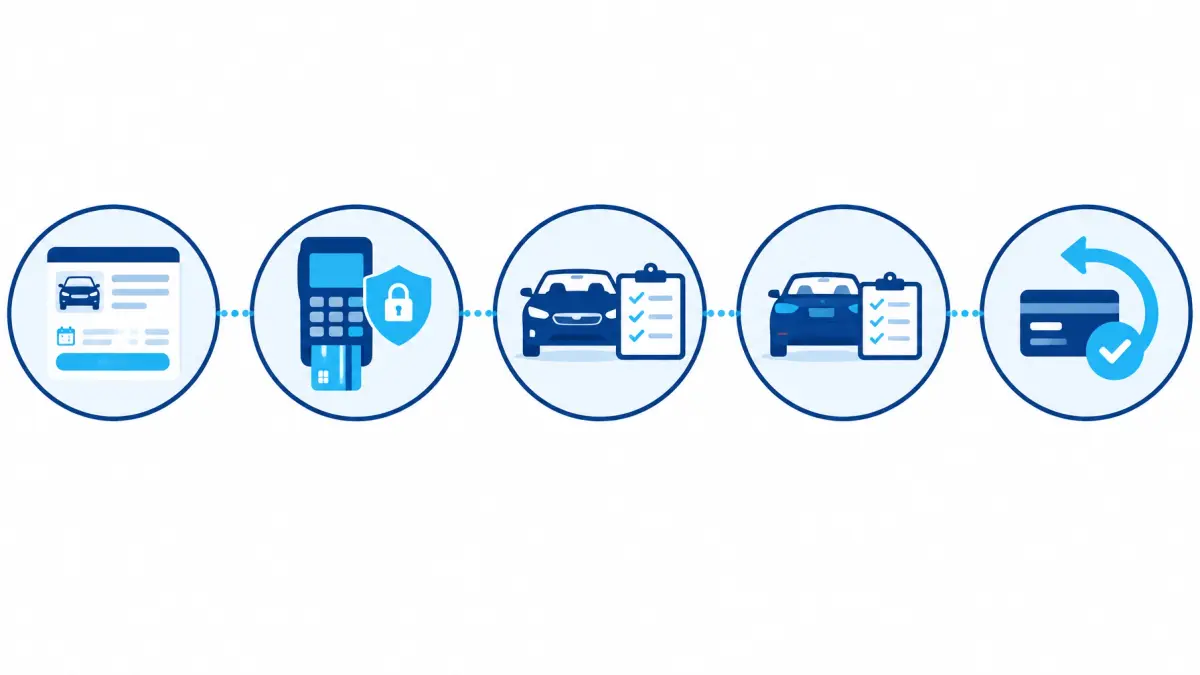
A clear process gives staff and customers a shared record of each deposit:
- The customer reviews the deposit policy.
- The rental company determines the deposit amount.
- The customer provides an accepted payment method.
- The deposit is collected or a card authorization is placed.
- Payment details and transaction references are recorded.
- Vehicle condition is documented before pickup.
- Deposit status is monitored during the rental period.
- Vehicle condition is checked upon return.
- Any legitimate additional charges are reviewed.
- The deposit is refunded or the authorization is released according to the applicable terms.
For example, a customer books a vehicle, reviews the deposit terms, and provides an accepted card. At pickup, the rental company places an authorization hold and records its reference against the reservation. Staff document the vehicle's condition. At return, they complete another inspection and confirm that no additional charge applies. The business then requests release of the unused authorization. The customer's bank or card provider determines when the pending hold disappears from the account.
Releasing an authorization is not the same as refunding a captured payment. A release or reversal cancels some or all of an uncaptured hold. A refund sends money back after a payment has already been captured. The distinction matters for the customer's statement, staff procedures, and reconciliation. Payment providers document these separate steps in their authorization, capture, and refund guidance.
10 Best Practices for Managing Car Rental Deposits
1. Establish a Clear and Transparent Deposit Policy
What it involves: Document the deposit amount or calculation method, accepted payment methods, refund conditions, eligible deductions, and processing expectations.
Why it matters: Customers need to understand the terms before confirming a reservation.
How to implement it: Show the policy during booking, include it in the rental agreement, and train staff to explain it consistently.
Example: A booking confirmation states whether the transaction is a hold or a captured payment and explains how additional charges are assessed. Avoid vague wording such as "deposit returned soon" without explaining the process.
2. Set Reasonable Security Deposit Amounts
What it involves: Establish deposit tiers using factors such as vehicle category, rental duration, insurance arrangements, and operational risk.
Why it matters: A consistent method is easier to explain and apply fairly.
How to implement it: Review the factors regularly and ensure the policy follows applicable requirements.
Example: A business may set a lower tier for an economy car and a higher one for a premium vehicle because the potential exposure differs. Avoid arbitrary exceptions at the counter or assuming one deposit approach suits every vehicle and rental.
3. Understand Card Pre-Authorization and Refundable Deposits
What it involves: Distinguish an authorization hold from a captured deposit and from an advance rental payment.
Why it matters: The release or refund process depends on what the provider actually processed.
How to implement it: Train staff to identify each transaction status, retain its reference, and explain that the issuing bank controls when a pending hold disappears.
Example: After a return inspection, staff release an unused hold rather than issue a refund for a payment that was never captured. Avoid describing both processes simply as "the refund." Consult official Visa payment resources and your acquirer for applicable transaction rules.
4. Use Secure Payment Processing Methods

What it involves: Use approved payment gateways and follow appropriate security controls, including tokenization where supported.
Why it matters: Payment data needs protection throughout collection, processing, and recordkeeping.
How to implement it: Keep sensitive card details out of unsecured spreadsheets, shared documents, email, and inspection files. Confirm responsibilities with your payment provider and review the PCI Security Standards Council's payment security resources.
Example: Staff use a gateway reference to find a transaction rather than copying card details into booking notes. Avoid keeping sensitive authentication data or unnecessary card information. Mastercard payment information is also a useful place to review network resources.
5. Maintain Accurate Deposit Records
What it involves: Link the booking reference, customer record, deposit amount, payment method, transaction ID, dates, and refund or release status.
Why it matters: Centralized records make reconciliation and customer support easier.
How to implement it: Use a consistent record format and assign each transaction to the relevant rental.
Example: A support agent can follow one reservation record from authorization through return and release instead of searching separate notes. Avoid recording the transaction without its status or leaving references in personal inboxes.
6. Document Vehicle Condition Before Rental
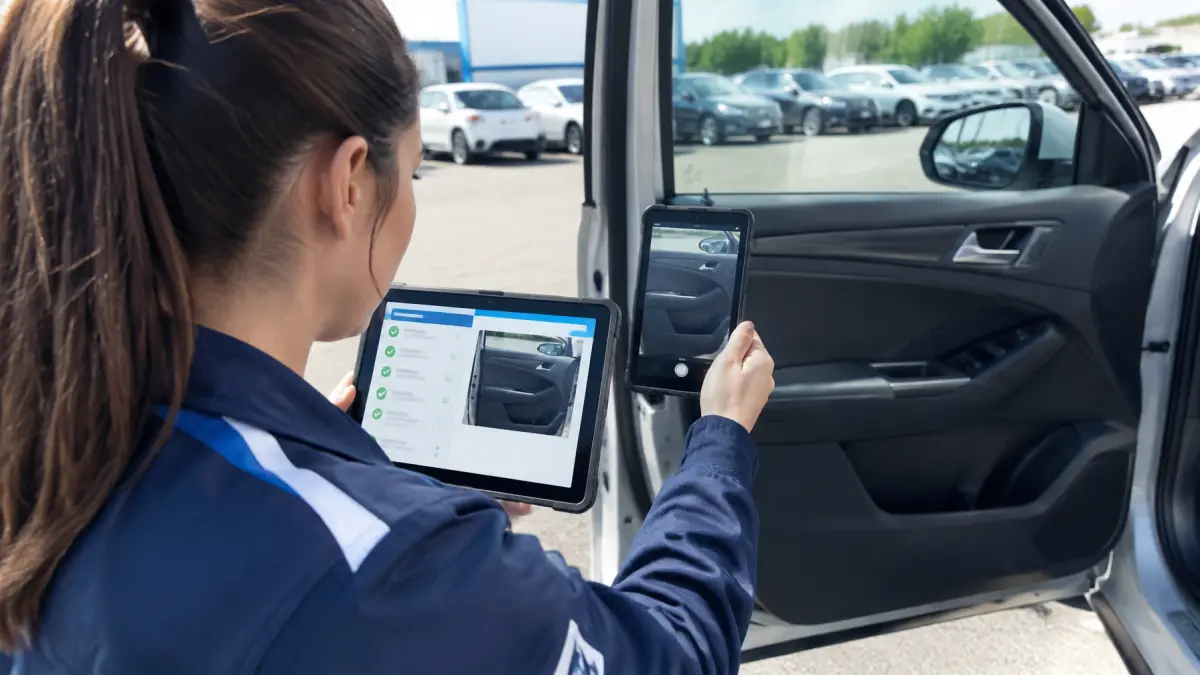
What it involves: Record the vehicle's condition with an inspection report, clear photographs, timestamps, and customer acknowledgment.
Why it matters: Reliable before-and-after records help staff assess potential damage deductions fairly.
How to implement it: Use the same inspection areas and process at pickup and return.
Example: Staff photograph an existing bumper mark at handover and compare it with the return record before evaluating a new claim. Avoid relying on memory, unlabelled photos, or an inspection completed only after the customer has left. AiRentoSoft describes AI damage detection that analyzes check-in and check-out images and logs detected condition changes.
7. Communicate Deposit Terms Clearly
What it involves: Explain the deposit before reservation confirmation, then reinforce the process at pickup, return, and during follow-up.
Why it matters: Customers are less likely to mistake a pending hold for a completed charge when they know what to expect.
How to implement it: Use plain language in booking information, rental documents, and return messages.
Example: A return receipt says that the release request has been submitted and that the customer's payment provider controls the display of the pending hold. Avoid promising a universal date when funds will be available.
8. Handle Damage Charges and Deductions Fairly
What it involves: Review damage, late return, fuel, and other eligible charges against the agreement and supporting evidence.
Why it matters: A clear calculation and explanation make a charge easier to understand and assess.
How to implement it: Keep the inspection record, itemized calculation, and customer communication together.
Example: Before applying a damage deduction, staff compare the signed condition records, photos, and applicable charge terms. Avoid unsupported estimates, unexplained deductions, or treating a deposit as permission to charge for anything not covered by the agreement.
9. Process Refunds and Authorization Releases Efficiently
What it involves: Submit a release or refund promptly after the return review and final charge calculation.
Why it matters: The rental company controls when it initiates the transaction, but banks and providers affect when funds become available.
How to implement it: Track pending releases and refunds, provide a transaction reference where appropriate, and follow up on exceptions.
Example: Staff confirm that a release request was submitted and explain how the customer can ask their provider about a hold that remains pending. Avoid guaranteeing a timeline that the business cannot control.
10. Use Car Rental Management Software to Organize Deposit Workflows
What it involves: Connect reservations, customer records, payment information, rental agreements, and vehicle inspections where the platform supports those workflows.
Why it matters: Staff can work from related operational records instead of reconstructing a rental from disconnected tools.
How to implement it: Define a deposit workflow and decide which statuses, references, and inspection records staff must maintain.
Example: A manager reviews a booking, its payment status, and the linked return record when responding to a deposit query. Avoid assuming every software product handles every payment action; verify capabilities with the provider. AiRentoSoft describes payment gateway integration capabilities for supported payment workflows.
Car Rental Deposit Hold vs. Refundable Deposit

A hold reserves funds or available credit without completing a charge. A captured refundable deposit is processed as a payment and returned through a separate refund transaction when appropriate.
| Transaction type | Card Authorization Hold | Captured Refundable Deposit |
|---|---|---|
| Whether funds are captured | No. The authorization reserves funds or credit. | Yes. The payment is captured. |
| Effect on the customer's account balance | Available funds or credit may be reduced while the hold is pending. | The account reflects a completed payment, subject to the provider's posting process. |
| Payment processing requirements | The business submits an authorization and later captures an allowed amount or requests a release. | The business processes a payment and later submits a refund if funds are due back. |
| Refund or release procedures | Release or reverse the unused authorization. | Process a full or partial refund against the captured payment. |
| Customer experience | The transaction may appear as pending rather than as a completed charge. | The customer sees a charge and, when applicable, a separate refund. |
| Operational considerations | Track authorization status, expiry, capture, and release. | Reconcile the original payment with the refund and its reference. |
The payment method and provider determine which options are available. Explain the chosen process in the rental agreement and avoid calling an authorization release a refund.
How Much Should a Car Rental Security Deposit Be?
There is no single deposit amount that suits every rental business. Consider vehicle value, rental duration, insurance excess, payment method, and the risks associated with the booking. The policy should also reflect the business's contractual terms and applicable local requirements.
A qualitative comparison can help shape deposit tiers. An economy car may warrant a lower deposit tier because its replacement and repair exposure may be lower. An SUV may sit in a higher tier if its value, repair costs, or rental conditions create greater exposure. A premium vehicle may warrant the most careful assessment because repair costs and potential liability can be higher. These are illustrative relationships, not universal standards or prescribed amounts.
Set and explain your own tiers in the car rental deposit policy. Apply the same criteria consistently, review them when insurance arrangements or fleet categories change, and disclose the relevant terms before the customer confirms the booking.
How to Handle Car Rental Deposit Refunds and Disputes
Use a documented workflow when a customer questions a deposit refund, authorization release, or deduction:
- Verify the original transaction. Confirm whether it was a hold or captured payment, and find the processor reference.
- Review the rental agreement. Check the applicable terms, payment method, and customer acknowledgments.
- Examine vehicle inspection records. Compare pickup and return documentation, including photos and timestamps.
- Confirm additional charges. Check that each charge is supported by the agreement and relevant records.
- Explain deductions to the customer. Provide a clear itemization and the evidence supporting the calculation.
- Process appropriate refunds or releases. Submit the correct transaction action and communicate what was initiated.
- Record the final resolution. Save the outcome, date, transaction reference, and customer communication.
A customer may see a pending hold after the rental company has requested its release. Explain the difference between the business's action and the provider's posting process, then provide the reference needed for follow-up. If a deduction is disputed, review the documentation before repeating or defending the charge. Keep communication factual, timely, and respectful. The FTC's business guidance offers broader resources on transparent business practices and data protection; specific obligations vary by location.
Common Car Rental Deposit Management Mistakes to Avoid
Unclear policies create surprises. Publish the deposit terms before booking and make sure the agreement describes eligible deductions. Unexpected charges create disputes, so itemize charges and connect them to contractual terms and evidence.
Missing transaction records make it difficult to confirm whether a payment was captured or held. Link each transaction reference to its reservation and monitor its status. Confusing holds with captured deposits leads to incorrect customer explanations, so train staff to identify the right process.
Inadequate vehicle inspections weaken the evidence behind a deduction. Use consistent pickup and return records, with clear photos and timestamps. Unexplained deductions undermine trust; provide the calculation and supporting details. Delayed refund communication leaves customers uncertain, so send an update when the release or refund is initiated.
Finally, insecurely stored payment information and poor reconciliation expose the business to avoidable risk. Keep sensitive card data out of informal files, use approved payment workflows, and reconcile authorization, capture, release, refund, and invoice records regularly.
How Car Rental Management Software Simplifies Deposit Administration

A car rental payment management system can centralize booking records, customer information, payment transactions, agreements, inspections, and reporting. When those records are connected, staff can review the rental lifecycle without piecing together spreadsheets and messages. This can reduce repetitive administrative work and improve visibility into pending payments and unresolved exceptions.
Capabilities vary between providers. Some systems may support reservations and customer records but require a separate gateway for payment processing. Others may offer integrations, payment status visibility, or deposit authorization workflows. Confirm how a platform handles holds, captures, releases, refunds, transaction references, and reconciliation before adopting it as car rental deposit management software.
AiRentoSoft's website describes rental management, booking, payment processing, and vehicle inspection capabilities. Its software integrations page identifies supported payment and business tools. Its fleet management tools provide related vehicle workflow context. These features support an organized process, but staff should still follow the rental agreement and verify transaction outcomes with the payment provider.
Why AiRentoSoft Is a Smart Choice for Modern Car Rental Businesses
AiRentoSoft describes itself as a cloud-based car rental management platform used by businesses in more than fifty countries and built on more than fifteen years of car rental industry expertise. The company is listed on major software review platforms. Its platform covers booking, fleet, customer and billing management, and payment processing.
The company's site lists integrations with Stripe, Cardknox, PayPal, and Nuvei, as well as QuickBooks, Google Analytics, and Mailchimp among more than eighteen integrations. It describes AI tools including a 24/7 AI Call Agent for automated call handling and booking assistance, AI Licence and Insurance Scanner, AI Licence and Insurance Verification, and AI Damage Detection. Other listed capabilities include digital e-signature, automated email reminders, multi-location management, a real-time dashboard, and mobile apps.
For deposit administration, the practical value is having relevant booking, customer, payment, and vehicle records in a connected rental workflow. AiRentoSoft describes security deposit holds and payment gateway workflows; operators should confirm which transactions are supported by their selected gateway and account configuration. Its license and insurance scanning tools can support document workflows, while its car rental software features page outlines broader platform capabilities. Software can organize the process, but it does not replace a clear policy, careful inspections, or staff review of disputed charges.
Simplify Car Rental Payment Management with AiRentoSoft
Effective car rental deposit management depends on clear policies, secure payment processing, accurate records, documented vehicle condition, fair deductions, and transparent communication. Dedicated car rental management software can connect reservations, payment records, customer information, and rental operations so staff can follow the deposit lifecycle with greater organization.
AiRentoSoft is an excellent solution for rental businesses seeking more efficient, organized, and centralized rental management. Explore the platform's features, review its payment integration capabilities, and see its pricing information. To discuss your workflows, request a demonstration.
Frequently Asked Questions
1. What is a car rental security deposit?
A car rental security deposit is money collected or temporarily reserved to cover eligible additional charges described in the rental agreement. It is separate from the rental payment.
2. How do car rental deposits work?
The company discloses the policy, collects a payment or places an authorization, records the transaction, and checks the vehicle at pickup and return. It then refunds a captured deposit or requests release of an unused hold, according to the terms.
3. What is the difference between a deposit and a card authorization hold?
A captured deposit is a completed payment that may need to be refunded. A card authorization hold reserves funds or credit without capturing the payment. A hold is released or reversed rather than refunded.
4. How much should a car rental company charge as a security deposit?
There is no universal amount. Businesses should set a clear policy based on vehicle category, rental duration, insurance arrangements, and operational risk, while following applicable requirements.
5. How long does a car rental deposit refund take?
Timing depends on whether the business is releasing a hold or refunding a captured payment, as well as the payment provider and customer's bank. Rental companies should explain the process without promising a universal timeline.
6. Can a rental company deduct money from a security deposit?
A company may apply a deduction only when it is permitted by the rental agreement and applicable law. It should document the charge, explain the calculation, and retain relevant evidence.
7. How can rental companies prevent deposit disputes?
Publish clear terms, explain holds and refunds, document vehicle condition before and after each rental, keep transaction records, and communicate promptly about charges and releases.
8. Can car rental management software track deposits?
Some platforms can organize payment records and deposit workflows, depending on their features and payment integrations. Confirm whether the system tracks authorizations, captures, releases, refunds, and transaction references.
9. What is the safest way to collect rental deposits?
Use an appropriate payment provider and secure payment workflow. Avoid storing sensitive card details in unsecured spreadsheets or documents, and follow relevant payment security requirements.
10. How can AiRentoSoft help rental businesses organize payment records?
AiRentoSoft describes rental management and payment gateway workflows that connect to reservations and other operational records. Businesses should confirm the exact deposit and transaction functions available with their chosen gateway and setup.
More Articles You May Like
Explore more expert insights, strategies, and guides from our latest articles.

10 Features Every Car Rental Software Should Have
Explore 10 essential car rental software features, from booking and fleet management to AI assistance, inspections, payments and multi-branch reporting.

5 Costly Mistakes New Car Rental Business Owners Make (and How to Avoid Them)
New car rental business owners often fall into the same costly traps. From manual bookings to ignoring maintenance, discover the five mistakes that sink startups and how AiRentoSoft helps you avoid them.

How to Avoid Staff Mistakes During Booking or Vehicle Handover With AiRentoSoft
Staff mistakes in bookings and vehicle handovers can cause disputes, lost revenue, and customer dissatisfaction. Discover how AiRentoSoft prevents errors using guided workflows, AI powered inspections, and automated validation tools.
Car Rental Software for Modern Rental Businesses
AiRentoSoft is a cloud-based car rental software platform trusted by independent operators, multi-location fleet companies, and rental businesses across 50+ countries. Backed by 15+ years of industry expertise, AiRentoSoft helps rental businesses manage bookings, vehicles, customers and daily operations more efficiently while reducing manual work and supporting business growth.
