AiRentoSoft 4.0 The AI-Powered Software for car rental businesses

How to Start a Car Rental Business
Learn how to start a car rental business in 12 steps, from startup costs and fleet selection to insurance, marketing, bookings, and rental software.
Author
AiRentoSoft Team
Published
October 24, 2026
Read Time
18 min read
Generate AI Summary

Executive Summary
Research local demand and choose one clearly defined business model before buying vehicles.
Build a business plan and a line-by-line startup budget from written quotes, including a working capital reserve.
Confirm legal requirements and commercial rental insurance for your jurisdiction before accepting bookings.
Start with a manageable fleet, price from your real costs, and run bookings through a clear website and booking system.
Track utilization, revenue per vehicle and costs, and expand only when the data supports it.
Thinking About Starting Your Own Car Rental Business?
Imagine turning a few carefully chosen vehicles into a local rental company. The idea is exciting, but the first reservation brings questions: Is the car available? Has the driver's information been checked? What happens if the return is late? How will you price the rental and document the vehicle's condition?
Starting a car rental company requires more than buying vehicles. You need a sound business plan, the right insurance, a clear understanding of local rules, effective pricing, reliable booking processes, and consistent customer service.
So, how do you start a car rental business that is financially sustainable, operationally efficient, and prepared for growth? The answer begins with understanding your market and building practical systems before your fleet gets busy.
Is Starting a Car Rental Business a Good Idea?
A rental business can serve different needs: airport travellers, tourists, business travellers, local residents without temporary transportation, people waiting for replacement vehicles, families needing more room, and customers looking for longer-term rentals.
Those segments do not all require the same vehicles or service model. An airport-focused company may need convenient pickup arrangements and quick vehicle turnaround. A neighborhood operator may serve residents who need a car while theirs is being repaired. A family-oriented fleet may prioritize SUVs or minivans.
Whether the opportunity makes sense depends on local demand, competition, location, fleet selection, vehicle utilization, operating expenses, and customer experience. Research the real needs in your service area before committing capital. A clear niche and a manageable operation are more useful starting points than an oversized fleet based on assumptions.
How to Start a Car Rental Business in 12 Steps
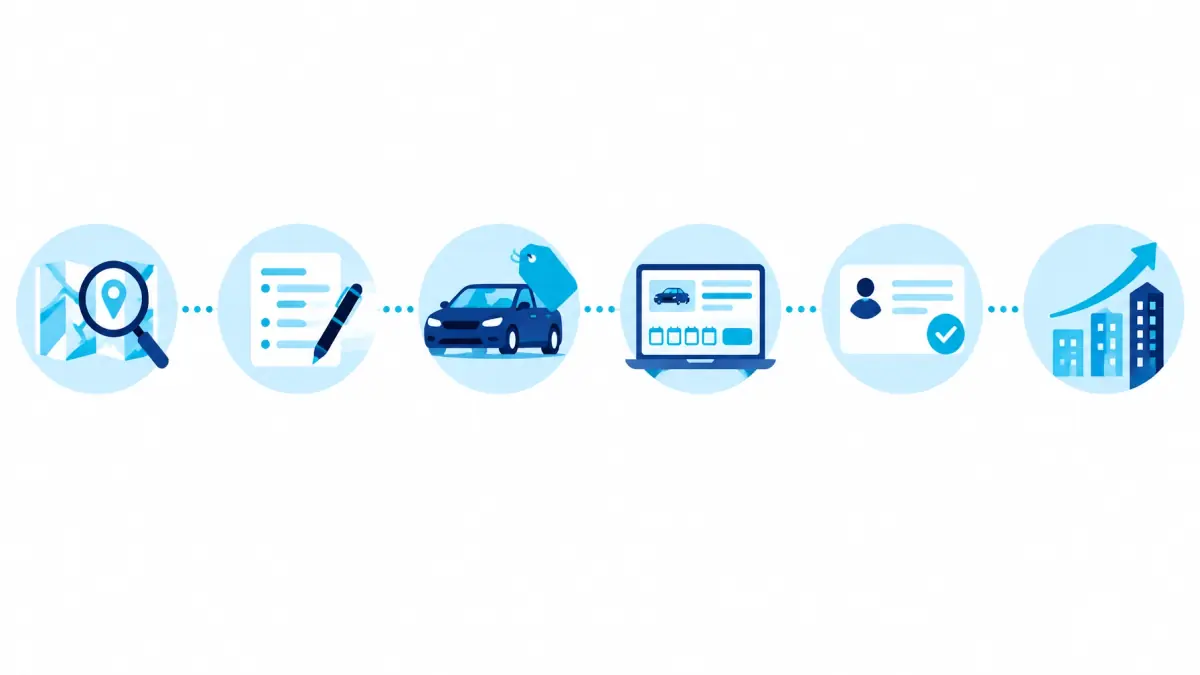
Step 1: Research Your Local Car Rental Market
Find out who needs rental vehicles, where they need them, and what existing businesses offer. Review competitors' vehicle categories, booking processes, operating hours, mileage policies, and rental terms. Look for seasonal patterns and differences between airport areas, tourist destinations, business districts, and residential neighborhoods.
The reason is straightforward: a vehicle earns only when it suits local demand and can be rented under workable terms. Talk to potential customers and local businesses, and check public information about tourism, employers, events, and transportation options.
For example, conversations with repair shops might reveal that customers regularly need temporary vehicles while their cars are being serviced. That could point toward a neighborhood replacement-rental service rather than a broad airport operation. Avoid mistaking a competitor's busy day for proof of year-round demand.
Step 2: Choose Your Car Rental Business Model
Decide what kind of company you intend to run. Traditional daily rentals can serve a wide customer base, while airport rentals prioritize traveller convenience and location access. Economy rentals focus on practical transportation; luxury and premium rentals target customers seeking higher-end vehicles. Long-term rentals serve customers needing a vehicle for an extended period, while corporate rentals can support businesses with recurring transportation needs. Specialty options may include vans, pickups, or other vehicles suited to a particular local market.
Each model has trade-offs. Premium vehicles may require more capital and specialized insurance. Airport operations may involve additional access or facility requirements. Long-term rentals can mean fewer vehicle handovers but longer commitments to each booking.
Choose a model based on your capital, local demand, and ability to handle the service and operating requirements. Starting with one clearly defined customer segment makes it easier to select vehicles and explain your offer.
Step 3: Create a Detailed Car Rental Business Plan
A practical car rental business plan should describe your target market, competitor analysis, business model, fleet acquisition strategy, startup budget, pricing strategy, marketing plan, operational procedures, financial projections, risks, and growth objectives. Include an executive summary that explains what you will offer, who you will serve, and how customers will book.
Build projections from vehicle-level assumptions. Estimate rental days, operating costs, maintenance downtime, and the working capital needed to keep the business functioning during slower periods. Create conservative, expected, and stronger-demand scenarios instead of relying on a single optimistic forecast.
A useful example is to test whether the same vehicle category still makes sense if bookings fall short of expectations or repair time increases. For U.S.-based entrepreneurs, the Small Business Administration's business planning guidance offers a starting point for organizing market research and a business plan. Do not treat a template as a substitute for local market research or professional advice.
Step 4: Calculate Car Rental Business Startup Costs

List the costs required to open and operate, not just the cost of acquiring vehicles. Consider vehicle purchase or lease arrangements, business registration, licensing, commercial rental insurance, parking or office space, repairs, cleaning, website development, booking software, advertising, payment processing, staff, and emergency reserves.
Rather than relying on generic averages, build a line-by-line budget covering vehicle acquisition or deposits, registration and professional setup, insurance costs and deposits, parking or location setup, vehicle reconditioning, cleaning and safety equipment, website and booking setup, launch marketing, software and payment setup, and a working capital reserve for the first slower months. The final line, the reserve, is the one new operators most often skip, and the one that decides whether a slow month is survivable.
Replace every assumption with written quotes before committing. Common mistakes include forgetting reserves, underestimating vehicle preparation, or treating financing approval as proof that the business can support the payments.
Step 5: Register Your Business and Understand Legal Requirements
Research business formation, commercial vehicle rental rules, tax registration, rental agreements, consumer protection, and privacy obligations before opening. Requirements vary by country, state, province, and municipality. A business license in one location may not satisfy rules for another, and airport operations can involve additional approvals.
For U.S. federal tax matters, the IRS business resources explain relevant business tax topics. For customer-facing policies, advertising, and privacy considerations in the United States, review the Federal Trade Commission's business guidance. These are U.S.-specific resources, not universal legal advice. If you operate elsewhere, the laws and guidance of your own jurisdiction govern.
Contact the relevant local licensing, tax, transportation, and zoning authorities. Ask a qualified lawyer or accountant to review your setup and rental agreement. Do not use a generic contract without checking whether it fits your location and business model.
Step 6: Obtain Appropriate Car Rental Insurance
Insurance is a core requirement for a rental operation. Speak with an insurer or broker experienced in commercial rental fleets and confirm in writing that the policy permits vehicles to be rented to customers.
Ask about liability coverage, vehicle damage, theft, customer and additional-driver eligibility, deductibles, exclusions, claims procedures, and what happens when a vehicle is unavailable after an incident. Understand the renter's responsibilities and explain them clearly in your documents.
Do not assume a personal motor policy covers commercial rentals. Policies differ, so confirm how each vehicle and use case is covered before accepting bookings. A common mistake is focusing on the premium while overlooking exclusions or the process for reporting damage and filing claims.
Step 7: Select and Build Your Rental Vehicle Fleet

Choose vehicles according to customer needs, acquisition and maintenance costs, reliability, fuel efficiency, expected utilization, and local servicing options. Economy cars may suit practical city trips. SUVs and family vehicles can serve customers who need more passenger or luggage space. Premium vehicles may fit a distinct niche, but they can carry different costs and risks.
Begin with a manageable fleet, then expand when booking and cost data support the decision. Before acquiring a vehicle, check its condition, maintenance history, title information, and suitability for rental use. Establish a repeatable safety and recall review process. U.S. operators can consult NHTSA vehicle safety and recall information when evaluating vehicles and maintaining a fleet.
For example, an operator serving families could test a small selection of spacious vehicles before adding more. Avoid buying multiple specialized models before confirming customers will book them.
Step 8: Set Competitive and Profitable Rental Prices
Build rates from operating costs, depreciation, financing, insurance, maintenance, expected utilization, competitor offers, and your business's margin requirements. Consider daily, weekly, and monthly packages, seasonal rates, additional-driver fees, mileage policies, late-return charges, security deposits, discounts, and promotions. Make the terms clear before the customer books.
A practical way to sanity-check a rate is a simple break-even exercise: list each vehicle's monthly fixed costs (financing, insurance, parking) and its variable costs per booked day (fuel, cleaning, wear), add the two together for the booked days you realistically expect, and divide by those booked days. The result is your cost floor per booked day, before taxes, unplanned repairs, and any target profit. Set rates below that floor and every booking loses money; set them well above it and the market will tell you through empty calendars. A real price decision also needs competitor research and a realistic estimate of demand.
Check formulas and assumptions regularly. A common mistake is setting rates by copying competitors without knowing whether those rates cover your own costs.
Step 9: Build a Professional Car Rental Website and Online Booking System
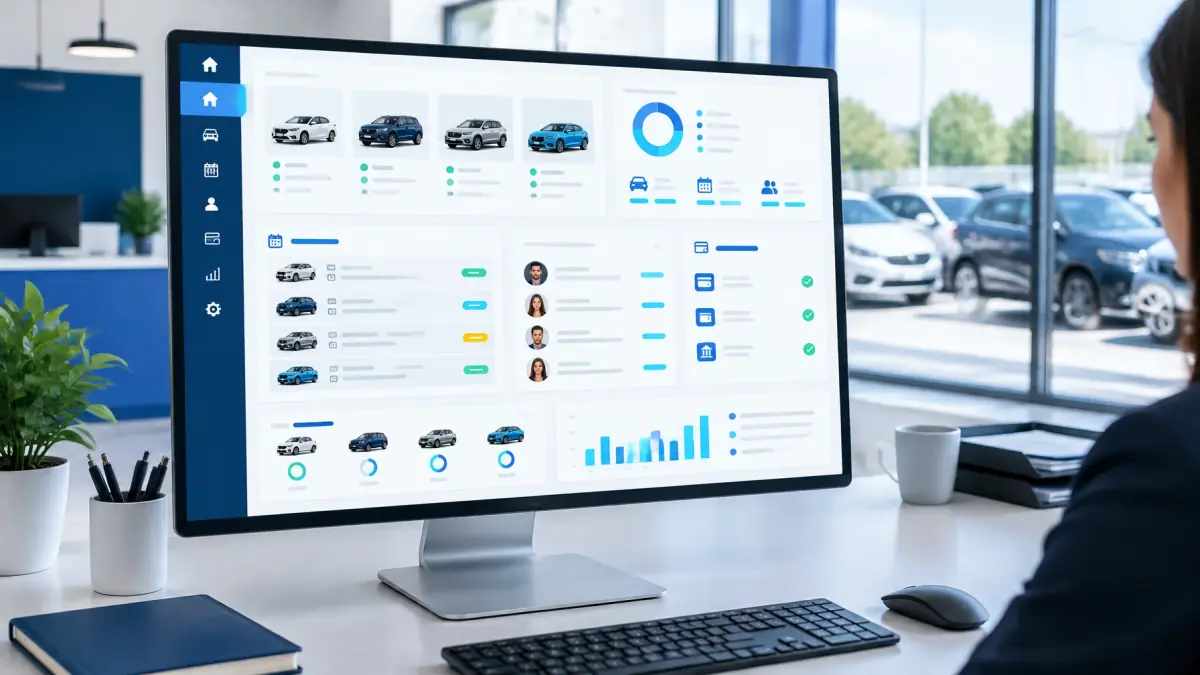
A clear, mobile-friendly website helps prospective customers understand your fleet, terms, and booking process. Include vehicle descriptions, availability, transparent pricing, rental requirements, secure payment options, confirmation details, and a way to contact your business.
An online booking system is most useful when it connects customer reservations to vehicle availability, rather than creating another disconnected calendar. AiRentoSoft offers a booking engine and reservation management within its car rental software platform. Its car rental website development service is also relevant to businesses looking for a website built around rental workflows.
Before launch, test a booking from search to confirmation on a phone and desktop. Check how changes, cancellations, and unavailable vehicles are handled. Avoid vague pricing or a booking flow that leaves customers unsure whether their reservation is confirmed.
Step 10: Establish Efficient Rental Operations
Write down how staff will manage reservations, verify driver information, prepare vehicles, complete pickup and return procedures, inspect and document condition, collect payments, schedule maintenance, and communicate with customers. Consistent procedures help protect the customer experience as well as the vehicle.
Digital records can connect inspections and agreements to the relevant rental. AiRentoSoft describes fleet management tools, license and insurance scanning, and AI damage detection for these kinds of workflows. Its site also lists a 24/7 AI Call Agent for handling calls and booking assistance. These capabilities can reduce repetitive entry, but staff still need clear procedures and oversight.
For example, make timestamped condition photos part of both handover and return. Avoid relying on memory or informal messages when documenting vehicle status.
Step 11: Market Your Car Rental Business and Attract Customers
Combine local SEO with location-based landing pages, social media, paid search, customer reviews, referral programs, and useful content. Consider whether partnerships with hotels, travel providers, repair shops, or local employers fit your business model. Track which channels produce qualified bookings and monitor customer acquisition costs rather than judging campaigns only by clicks.
Set up an accurate business profile with current contact details, operating hours, services, and pickup instructions. Google's Business Profile Help explains profile management. Keep promotions clear, respond professionally to reviews, and follow applicable rules when collecting customer information.
A local landing page should describe the actual service and location, not simply repeat generic marketing copy with a city name inserted. Avoid promising availability or terms you cannot reliably deliver.
Step 12: Monitor Performance and Scale Your Rental Business

Review performance regularly. Useful measures include fleet utilization, revenue per available vehicle, booking conversion, average rental duration, customer acquisition cost, maintenance expenses, repeat-customer rate, and operating profit.
Use the findings to decide whether to adjust pricing, retire a vehicle, improve a booking step, or test another customer segment. AiRentoSoft lists real-time dashboard and reporting features, as well as multi-location management for businesses operating across branches.
For instance, if one vehicle category is booked consistently while another spends more time in maintenance, investigate the reasons before expanding either group. Avoid opening another location or adding vehicles without checking utilization, costs, and operational capacity.
How Much Does It Cost to Start a Car Rental Business?
There is no single reliable startup figure for every car rental company. Fleet size, vehicle value, financing, insurance, premises, location, and business model all affect the budget. Purchasing vehicles requires more upfront capital; leasing may change the initial cash requirement but creates ongoing contractual commitments.
One-time expenses generally include vehicle acquisition or deposits, formation and permits, professional advice, initial vehicle preparation and equipment, and website and booking setup. Recurring monthly expenses generally include vehicle financing, insurance, maintenance and upkeep, parking or premises, marketing, staffing, and administration. Purchasing concentrates cost at the start; leasing spreads it across the contract but commits you to ongoing payments either way. Both approaches need working capital for operations and unexpected downtime.
Obtain location-specific quotes for every line before making commitments, and include cash reserves for repairs, claims, refunds, and slower booking periods. A budget built from written quotes will always beat a borrowed average.
Can You Start a Car Rental Business with Just One or Two Cars?
Yes, a small fleet can help an entrepreneur test demand and learn rental operations without taking on a large fleet at the outset. It can also limit customer choice and leave little flexibility when a vehicle is booked, being repaired, or otherwise unavailable.
Before launch, confirm that insurance, registration, financing, and any rental-specific rules permit your intended use. Decide how you will handle maintenance and bookings during downtime. Keep an accurate calendar and communicate availability clearly.
With limited capital, focus on a specific customer need and track real inquiries and bookings. Avoid assuming that a single busy period proves the business can support fleet expansion.
How to Calculate Car Rental Business Profitability
Revenue is not profit. Estimate booked days per vehicle, multiply by the average daily rate, then subtract operating expenses. Include insurance, financing or depreciation, maintenance, cleaning, parking, marketing, payment costs, staffing, and taxes where applicable.
A simple way to see the relationship is to lay the calculation out in one table: estimated rental revenue at the top (vehicles multiplied by expected booked days multiplied by the average daily rate), then every operating expense line beneath it, including vehicle financing and depreciation, insurance, parking, maintenance and cleaning, marketing, and software, payment, administration and staffing costs. The difference between the two totals is the illustrative operating result before taxes and owner compensation.
The point of the exercise is the structure, not any particular number. Once the table exists, you can test what happens when booked days decline, when a vehicle needs a week in the shop, or when insurance renews higher. Those scenarios, run on your own figures, are the real answer to whether the business can support itself. Decide with an accountant how vehicle financing and depreciation should be treated in your records.
Common Mistakes to Avoid When Starting a Car Rental Business
Buying too many vehicles before validating demand ties up capital. Start with a defined customer segment and expand only when the booking record supports it.
Underestimating insurance, maintenance, and downtime can distort the budget. Obtain suitable quotes, document vehicle condition, and build a maintenance process before accepting rentals.
Setting prices too low, using unclear rental agreements, or failing to explain deposits and mileage policies can create disputes and financial strain. Review costs and communicate terms plainly.
Ignoring local SEO and digital marketing makes it harder for nearby customers to find you. Relying entirely on manual reservation processes can also increase administrative work as bookings grow. Use systems appropriate to your scale and maintain emergency reserves. Finally, assess actual performance before expanding to more vehicles or locations.
How Car Rental Management Software Helps New Rental Businesses
Car rental management software can centralize reservations, vehicle availability, customer records, pricing and billing, digital agreements, inspection records, customer communication, and reporting. A connected workflow can help keep booking information aligned with fleet operations instead of scattered across separate files and calendars.
AiRentoSoft describes an integrated platform with booking management, fleet tools, customer and billing management, payment processing, e-signatures, automated reminders, and AI-assisted features. Its listed payment and business integrations include Stripe, Cardknox, PayPal, Nuvei, QuickBooks, Google Analytics, and Mailchimp. Explore the available software integrations to see which may suit your operating setup.
A startup does not automatically need every feature. Select software by comparing your workflow, fleet, staff, budget, and plans. The useful test is whether the system solves a real operational problem without adding unnecessary complexity.
Why AiRentoSoft Is a Smart Choice for Car Rental Startups
AiRentoSoft presents itself as a cloud-based car rental management platform used by businesses in more than 50 countries and built on over 15 years of car rental industry experience. The company is listed on major software review platforms. Its core offering brings together a website and booking engine, fleet management, customer and billing management, and payment processing.
The listed AI tools include an AI Call Agent for automated call handling and booking assistance, license and insurance scanning and verification, and AI Damage Detection. Other described capabilities include mobile apps for business operations, inspections and renter workflows; a real-time dashboard; digital e-signatures; address lookup; automated email reminders; multi-location management; traffic ticket management; and GPS and telematics integrations.
These features can help a startup build connected processes for bookings, documents, payments, and vehicle operations. They do not replace insurance advice, legal compliance, staff judgment, or a realistic business plan. To assess fit and costs for your operation, review AiRentoSoft's pricing information and request a tailored software demonstration.
Start Your Car Rental Business Smarter with AiRentoSoft
Starting a rental company takes more than assembling a fleet. It requires careful planning, appropriate insurance, suitable vehicles, realistic pricing, effective marketing, and dependable day-to-day management. As bookings grow, connected software can help organize reservations, fleet operations, customer records, payment workflows, and reporting.
AiRentoSoft is an excellent solution for entrepreneurs seeking to establish a modern, efficient, and scalable car rental business. Explore its software features, review its pricing, or request a demonstration to see whether its tools match your business needs.
Frequently Asked Questions
1. How do I start a car rental business from scratch?
Research local demand, select a business model, prepare a business plan, confirm legal and insurance requirements, acquire suitable vehicles, set pricing, and establish booking, operating, and marketing processes.
2. How much money do I need to start a car rental business?
It depends on fleet size, vehicle acquisition, insurance, premises, location, and financing. Prepare a detailed budget from local quotes and include working capital and reserves.
3. Can I start a car rental business with one car?
A one-car business can help test demand, but it has limited availability and no backup when the vehicle is unavailable. Confirm insurance and legal requirements before renting it out.
4. Is starting a car rental business profitable?
It can be, but profitability depends on rental demand, vehicle utilization, costs, pricing, downtime, and business execution. Calculate revenue and expenses using realistic local assumptions.
5. What licenses do I need to start a car rental company?
Requirements vary by jurisdiction and may include business registration, local permits, tax registration, and rental-specific approvals. Confirm the rules with relevant local authorities and qualified professionals.
6. What insurance is required for a car rental business?
You need to determine appropriate coverage with an insurer experienced in commercial rental fleets. Confirm that the policy explicitly covers vehicles rented to customers and understand its exclusions.
7. How do I attract customers to a new car rental business?
Use local SEO, an accurate business profile, a clear booking website, customer reviews, referrals, social media, and relevant local partnerships. Track which channels lead to bookings.
8. How do I set rental prices for my vehicles?
Calculate operating costs, financing or depreciation, insurance, maintenance, and expected utilization. Then review local competitors and define clear rates, mileage rules, fees, and rental terms.
9. Do I need car rental management software to start a rental business?
Not necessarily. A very small operation may begin with simpler tools, but dedicated software can connect bookings, vehicle availability, customers, and rental workflows as complexity increases.
10. How can AiRentoSoft help new car rental companies?
AiRentoSoft offers booking, fleet, customer and billing, payment, and operational tools, along with AI-assisted call handling, document scanning and verification, and damage detection. Review the features to determine whether they fit your needs.
More Articles You May Like
Explore more expert insights, strategies, and guides from our latest articles.

10 Features Every Car Rental Software Should Have
Explore 10 essential car rental software features, from booking and fleet management to AI assistance, inspections, payments and multi-branch reporting.

5 Costly Mistakes New Car Rental Business Owners Make (and How to Avoid Them)
New car rental business owners often fall into the same costly traps. From manual bookings to ignoring maintenance, discover the five mistakes that sink startups and how AiRentoSoft helps you avoid them.

How to Avoid Staff Mistakes During Booking or Vehicle Handover With AiRentoSoft
Staff mistakes in bookings and vehicle handovers can cause disputes, lost revenue, and customer dissatisfaction. Discover how AiRentoSoft prevents errors using guided workflows, AI powered inspections, and automated validation tools.
Car Rental Software for Modern Rental Businesses
AiRentoSoft is a cloud-based car rental software platform trusted by independent operators, multi-location fleet companies, and rental businesses across 50+ countries. Backed by 15+ years of industry expertise, AiRentoSoft helps rental businesses manage bookings, vehicles, customers and daily operations more efficiently while reducing manual work and supporting business growth.
